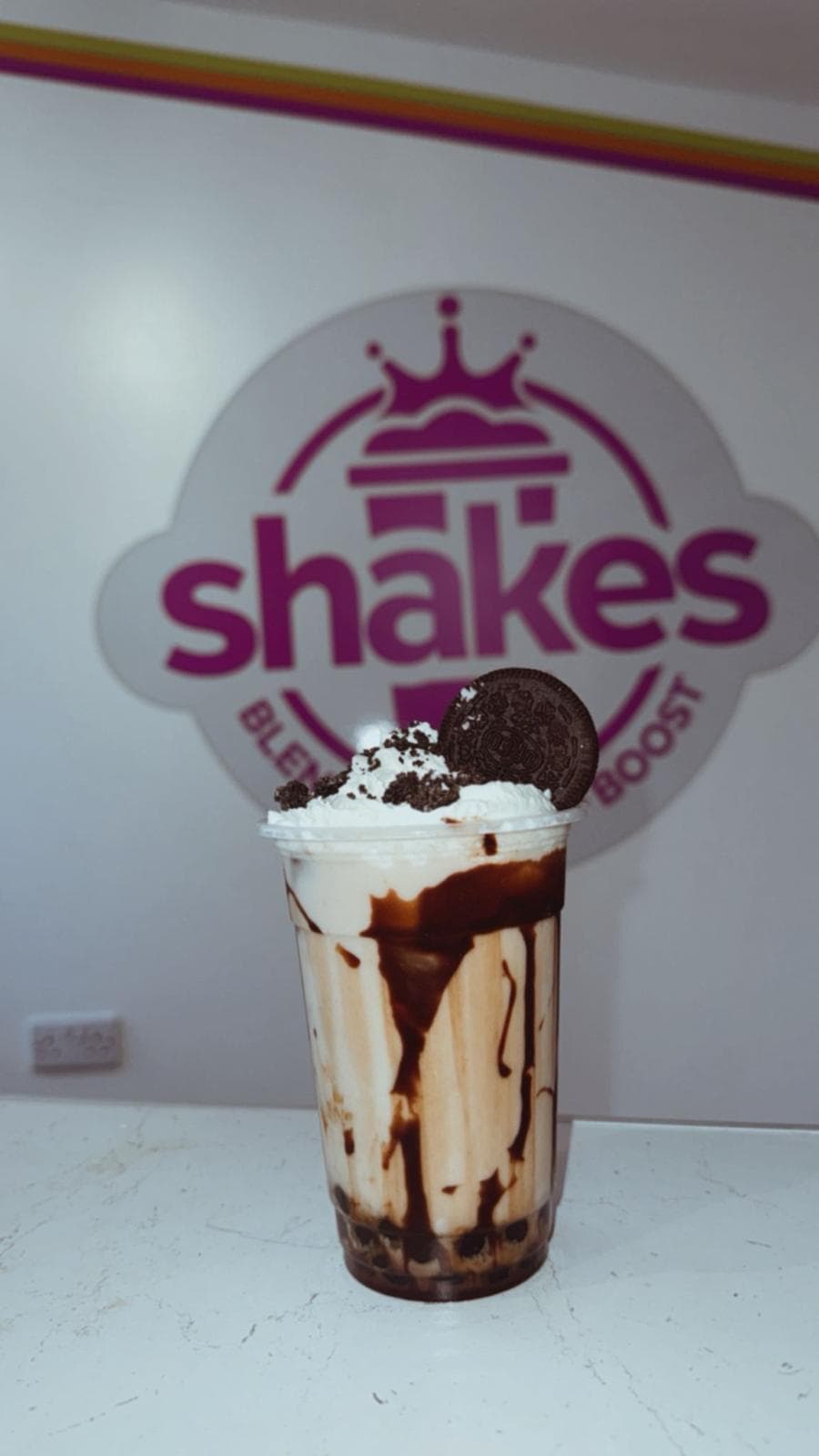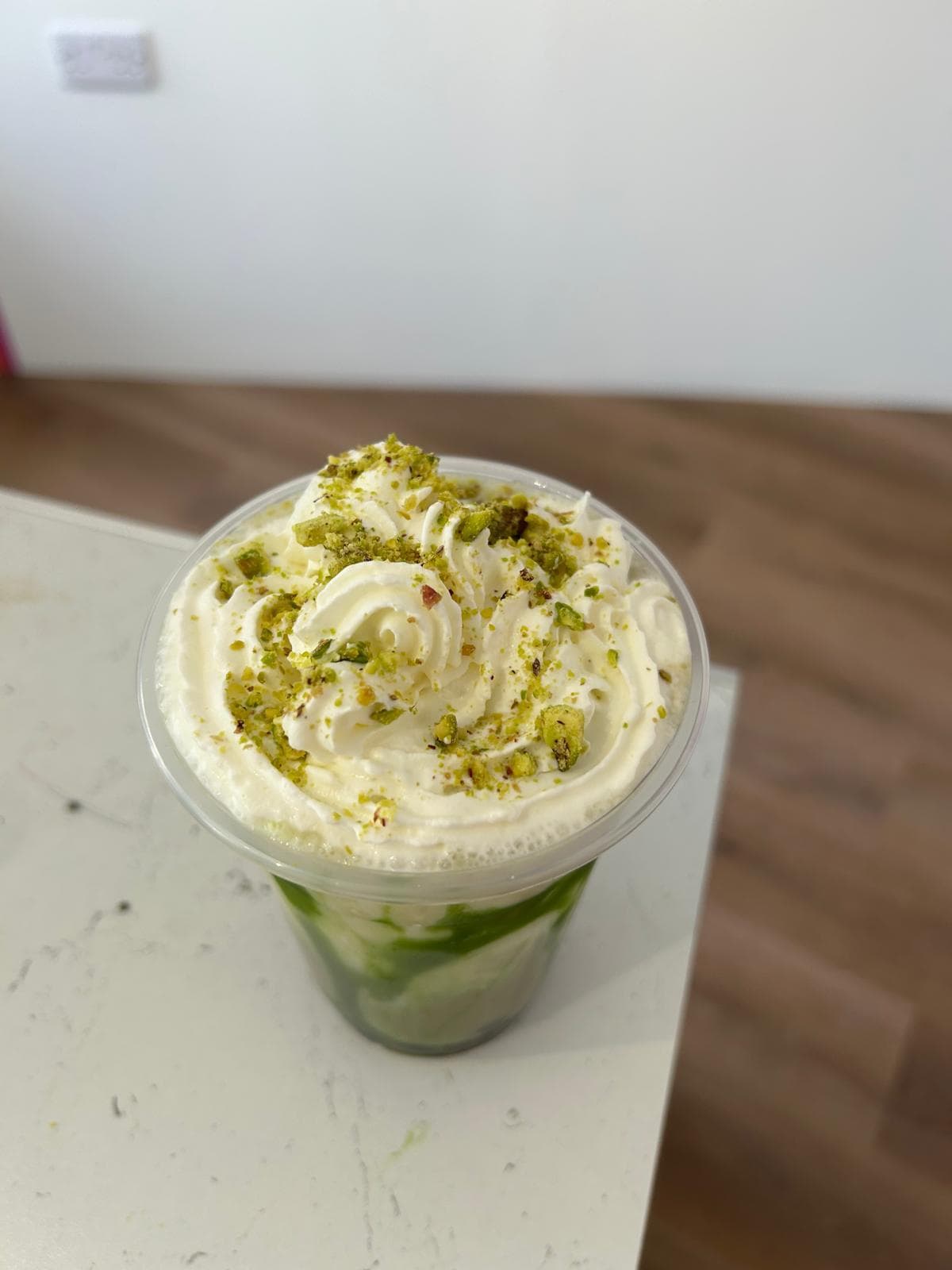
Taro is a starchy root vegetable from the Colocasia esculenta plant, native to Southeast Asia and the Pacific. It's been a staple food across Asia, Africa and Polynesia for over seven thousand years. In bubble tea, taro brings a sweet, gently nutty, vanilla-and-sweet-potato flavour with the recognisable pastel-purple colour — though if we're being honest, that bright purple is mostly food-grade colouring, not the root itself.
We get this question every week at the shop. Someone points at the lilac drink behind the counter and asks "what is that?" — and the answer turns out to be more interesting than most people expect. Taro isn't a flavour somebody invented for Instagram. It's one of the oldest cultivated foods on the planet, sacred in Hawaiian culture, eaten daily by hundreds of millions of people, and very much real. The marketing colour is the strange bit, not the ingredient.
Here's everything we wish someone had told us when we first put taro on our menu — botany, flavour, the colour question, taro vs ube, nutrition, and how we actually make ours.
Where taro comes from
Taro is the corm — the swollen underground stem — of Colocasia esculenta, a tropical perennial in the arum family (the same plant family as peace lilies and calla lilies, which is a fun piece of dinner-party trivia). Most botanists place its origin somewhere in the wet tropics of Southern or Southeast Asia — recent research narrows that to East India, Nepal and Bangladesh. From there it spread, very early in human history, in two big directions.
Eastward it travelled with Austronesian voyagers across the Pacific, reaching Indonesia, the Philippines, Polynesia, Hawaii and New Zealand. Westward it crossed into Arabia, Egypt, the Mediterranean, and eventually Africa. Before the Columbian exchange — before potatoes, tomatoes, and corn made the leap from the Americas — taro was the most widespread food crop on Earth. That's not hype. It's literal.
In Hawaii it became kalo, and the cultural weight is hard to overstate. In native Hawaiian cosmology, kalo is older than people — it's considered an ancestor, the elder sibling of the first human. You don't need to know the mythology to enjoy a milk tea, but it might shift the way you see that lilac powder.
Today taro feeds an estimated five hundred million people daily, across cuisines as different as Hawaiian poi, Filipino laing, Japanese satoimo stews, Chinese braised dishes, West African fufu, and Caribbean callaloo. Bubble tea is one of the newer uses, only really mainstream since Taiwanese boba culture took off internationally in the 2000s.
What taro tastes like
Cooked taro is mild, starchy, gently sweet and a bit nutty. The closest familiar reference points are sweet potato, chestnut, and a very faint hint of vanilla. It isn't loud. It's the opposite of loud — which is part of why it pairs so well with milk and tea, neither of which want to be shouted over.
Texture matters too. Properly cooked taro turns smooth and almost custardy when puréed, which is why taro paste makes such a clean base for desserts. In bubble tea, that texture comes through as a rounded, soft mouthfeel — less sharp than fruit syrups, more dessert-like than a plain milk tea, but never overwhelming.
Why is taro bubble tea purple? (the truth)
Here's the part that sometimes surprises people: pure, unprocessed taro flesh isn't bright purple. It's white to cream, with delicate lavender-grey threads running through it from the natural pigments in the corm. If you cooked a real taro and puréed it, your drink would come out a soft beige with hints of dusty lilac — pretty, but definitely not the saturated pastel violet you see in most cafés.
So where does that colour come from? Two possibilities, depending on the shop:
- Taro powder mixes — the industry standard. These are pre-blended powders combining real taro, milk solids, sugar, stabilisers and food colouring (sometimes synthetic, sometimes from purple sweet potato or ube extract). They're consistent, fast to use, and reliable on flavour. Most chains and most independents use them.
- Fresh taro paste — what a small handful of artisan shops do. Real cooked taro, sometimes mashed with a little condensed milk and sugar, served as chunky paste at the bottom of the cup. The colour is always more muted. The flavour is deeper, earthier, and less uniformly sweet. It's a different drink, really.
We're not saying one's right and the other's wrong. We're saying it's worth knowing. If you're standing in front of a shockingly violet drink, that pigment isn't doing the heavy lifting on flavour — the taro is, and it's working overtime to come through past the milk and tea. Respect the root. The colour is the costume.
Taro vs ube — different plants, same Instagram
Possibly the most common confusion in bubble tea is taro vs ube (pronounced oo-bay). They both go in pretty desserts. They both turn up purple. They are not the same thing, and they don't taste alike.
- Taro — Colocasia esculenta, arum family, from Southeast Asia. White-to-lavender flesh. Earthy, starchy, lightly sweet flavour. Used across Asian, Pacific, African and Caribbean cuisines for thousands of years.
- Ube — Dioscorea alata, true yam family, from the Philippines. Naturally vibrant purple flesh, all the way through. Distinctly sweet, with a flavour profile much closer to vanilla and hazelnut. Iconic in Filipino desserts — halo-halo, ube halaya, ube ice cream.
Different plant families, different continents of origin, different flavours, different texture, different cultural lineage. The reason they get conflated is purely visual — both lend themselves to that dreamy lavender colour palette social media keeps asking for. If a drink is naturally bright purple, it's likely got ube in it. If it's pastel purple, it's probably got food colouring or ube extract added to taro.
On the menu
Try our Taro Milk Tea
Pastel purple, properly chewy tapioca pearls, dairy or dairy-free. £4.50 regular, £5.50 large.
See the bubble tea menu
Is taro actually good for you?
Cooked taro is a genuinely nutritious vegetable. Per cup (about 132 grams, cooked), you're looking at roughly 187 calories, less than a gram of fat, around 6.7 grams of dietary fibre, and meaningful amounts of potassium, manganese, vitamin B6 and vitamin E. It's a good source of complex carbohydrates and contains a particular kind of starch — resistant starch — that the human body doesn't fully digest. About 12% of the starch in cooked taro behaves this way.
Resistant starch passes through to the large intestine and feeds beneficial gut bacteria, which is why taro is sometimes described as having a prebiotic effect. Combined with the fibre, this makes it friendlier to digestion and blood sugar than its calorie count suggests. The potassium helps with blood pressure regulation. The fibre's been linked in studies to lower cholesterol and reduced cardiovascular risk.
One more thing worth mentioning, because it surprises people: raw taro is not safe to eat. The corm contains calcium oxalate crystals, which produce a sharp burning, itching sensation in the mouth and throat. Cooking — boiling, steaming, baking — breaks down those crystals and makes taro both safe and delicious. This is why every traditional taro recipe involves heat. There's no such thing as a raw taro snack.
How Shakes makes our Taro Milk Tea
We use a quality taro powder — the industry-standard approach — brewed fresh to order with creamer and finished with chewy tapioca pearls. By default, the drink is made with dairy creamer, which gives that rounded, milkshake-adjacent texture taro is famous for. We can swap to a dairy-free creamer on request — taro takes well to oat or soy — and we'll happily skip the tea base entirely if you want a caffeine-free version (essentially a taro milk).
Standard size is 16 oz regular at £4.50, 22 oz large at £5.50. It comes with chewy tapioca pearls (the dark, slightly sweet ones) by default. If you're new to boba and the chewy texture isn't for you, ask us to swap to popping boba — those are the small fruit-juice-filled spheres that pop in your mouth instead of being chewy.
Most people order taro cold, and that's how we serve it by default. But it works warm too, and on a chilly Gravesend afternoon there's something genuinely lovely about a warm taro milk — a bit like a milky chestnut latte, only smoother. Just ask. We don't put it on the menu because nobody asks for it on the menu, but we're always glad to make it.
How to order taro at Shakes
A small cheat-sheet, in case it helps:
- The default — Taro Milk Tea, regular, with tapioca pearls, dairy creamer. Sweet, smooth, a textbook introduction to the flavour.
- Caffeine-free — ask for "taro milk only, no tea base." Same flavour, no buzz. Perfect for kids and afternoon wind-downs.
- Dairy-free — ask for the dairy-free creamer swap. Oat or soy works beautifully with taro's nuttiness.
- Less sweet — we can dial sugar down. Taro's natural earthiness shines through better at half-sweet.
- Popping boba instead of pearls — totally fine, just ask. Mango or strawberry popping boba pairs especially well.
A short note on why we wrote this
We're not a chain, we're a small family-run shop in Gravesend. So when we put a flavour on the menu, we want to actually understand it ourselves — and explain it honestly to anyone who asks. Taro is one of those flavours that has a much longer story than most people realise. If reading this makes you order one with a bit more curiosity, that's a good outcome. If it makes you skip taro and try our Strawberry Milk instead, that's also a good outcome.
Either way — thanks for reading. Come say hi at 2A Pelham Road, or order via your delivery app of choice.